Canada committed $81.8 billion to rebuild its military and called out aluminum by name. For investors paying attention to where industrial policy meets advanced materials, this is the signal you’ve been waiting for.
When the Government of Canada released its Defence Industrial Strategy in early 2026, most of the coverage focused on the big headline number: $81.8 billion in defense reinvestment. That is, without question, a generational commitment.
But if you’re an investor in advanced manufacturing, the number that should catch your attention is buried a few pages deeper, in the section on securing supply chains for critical raw materials.
There, in discussion of critical minerals, the strategy explicitly names metals, including aluminum, as priority inputs for Canada’s defense industrial base. It commits to helping aluminum producers pivot and retool to supply the grades and products Canada’s military needs. It also ties that commitment to a new Defence Investment Agency with a mandate to direct procurement toward Canadian firms.
At Equispheres, we will be responding to this moment. Here is what I think it means: for the defense sector, for advanced manufacturing, and for the investment opportunity ahead.
What the strategy says about aluminum
Canada’s Defence Industrial Strategy is a substantive document. It establishes a new “Build–Partner–Buy” framework for defense procurement, creates the Defence Investment Agency (DIA) to accelerate acquisitions, and identifies ten sovereign capability areas that Canada must control domestically, from aerospace and ammunition to digital systems, sensors, and specialized manufacturing.
Running through all of it is a consistent thread: Canada cannot depend on uncertain foreign supply chains for the inputs its military needs. The lessons of COVID-19 and wars in Ukraine and Iran have made that clear. The strategy’s response is to prioritize domestic sourcing wherever possible, and to use the procurement power of a generational defense build to create industrial capacity at home.
For those of us in the aluminum sector, this means two concrete things:
1. Aluminum is explicitly named as a defense-critical raw material. The strategy notes that, of the 12 defense-critical materials identified by NATO, Canada produces 10, and aluminum is on that list. It commits funding to help aluminum producers manufacture the specific grades and products required by the defense sector.
2. Advanced materials are listed as a sovereign capability. The strategy’s “Specialized Manufacturing” sovereign capability area includes the systems and materials that go into land vehicles, surface ships, and marine systems. Additive manufacturing of aluminum components sits squarely in this space.
Canada’s Defence Industrial Strategy is a funded, time-bound commitment backed by a new procurement agency with a mandate to direct contracts toward Canadian firms.
Why Equispheres is positioned to contribute to this strategy
Our technology produces aluminum powders that are non-explosive and non-combustible under standard test conditions. NExP-1 powder removes one of the biggest barriers to aluminum adoption in defense manufacturing: the safety and handling infrastructure required for explosive reactive materials. That matters enormously in the field and in secure facilities where explosion-proof storage isn’t an option.
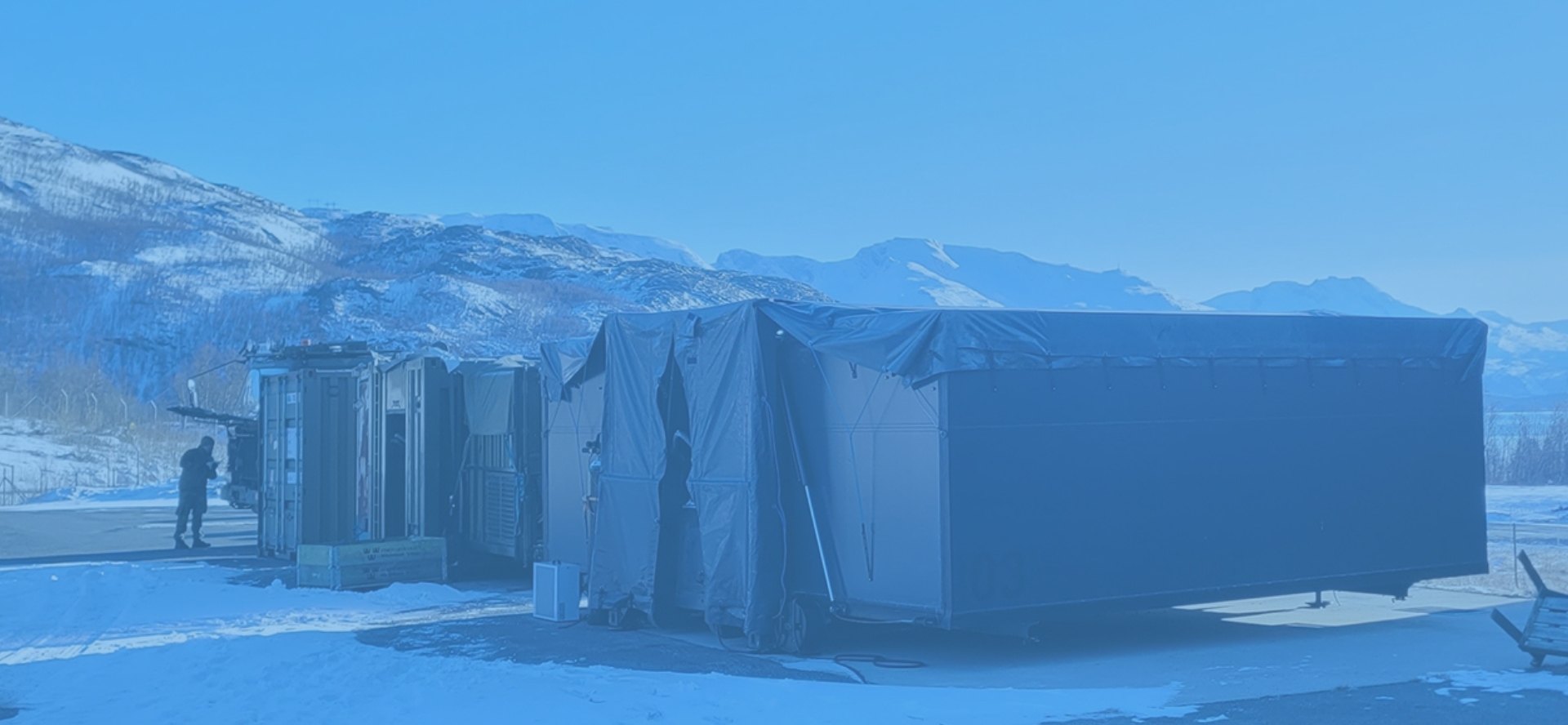
We have already demonstrated this capability in defense contexts. We have worked with Fieldmade to bring non-explosive aluminum additive manufacturing to forward operating environments, and we have been recognized by the U.S. Army as a strategic enabling technology. These are proof points that our technology works in the environments where defense procurement decisions get made.
Beyond safety, our powders are engineered for performance. Our materials consistently achieve build rates 3–9x faster than traditional aluminum powders in laser powder bed fusion systems, without sacrificing mechanical properties. For a defence sector that is now explicitly committed to accelerating procurement and scaling production, that efficiency advantage translates directly into cost and timeline savings.
Securing the supply chain
One of the most important phrases in Canada’s Defence Industrial Strategy is this: the Government will ensure that defense procurement delivers “secure strategic autonomy” and reduces “supply chain vulnerabilities.”
That language reframes what defense procurement is buying. Beyond just parts or platforms, it is buying supply chain security – the assurance that Canada can produce, maintain, and sustain its own defense capabilities without depending on foreign sources that may be unreliable, adversarial, or unavailable in a crisis.
Aluminum powder for Additive Manufacturing highlights a growing gap. While current consumption remains relatively limited, rising demands on defense and aerospace production are accelerating the need for high-performance materials. As AM grows in production-scale applications, securing reliable sources of advanced aluminum powder is increasingly important. Canada is well positioned to meet this need, with the critical minerals, processing capabilities, and manufacturing expertise required to support a resilient, domestic supply chain.
Equispheres produces our aluminum powder in Ottawa, from domestically sourced aluminum. We are actively reorienting our supply chain to serve defense sector clients, and we are working with the Canadian government as they advance plans for producing, processing, and stockpiling these critical inputs.
What this means for Canada’s advanced manufacturing sector
The implications are clear:
The market is real and funded. Canada has committed $81.8 billion in defense investment, with $6.6 billion specifically allocated to the Defence Industrial Strategy. The Build–Partner–Buy framework is designed to direct a meaningful share of that spending to Canadian firms operating in priority areas, including aluminum and critical minerals.
The policy tailwind is structural. This strategy sets 10-year targets, establishes a new permanent agency, and identifies sovereign capability areas that must be domestically supplied. For advanced manufacturing, this creates a more predictable demand environment where materials, processes, and production capacity are increasingly viewed through the lens of national security.
For companies working in metal AM, this raises the bar. Materials must be reliable, scalable, and aligned with domestic supply chain requirements. The ability to support production becomes critical.
Canada is well positioned in this regard. With access to critical minerals, established industrial infrastructure, and growing expertise in advanced materials, the foundations of a domestic supply chain are already in place. The focus now is on translating that potential into qualified, production-ready capability that can meet the needs of defense and aerospace programs as they grow.
A final word
As someone who has spent 30 years building companies in technology and manufacturing, my belief is that Canada’s Defence Industrial Strategy is not just a policy announcement, but a genuine long-term market shift.
The combination of a funded procurement commitment, a new agency designed to accelerate contracting, an explicit priority on domestic critical minerals, and a 10-year timeline for building sovereign industrial capacity is a structural change in the market.
As procurement timelines move forward, early readiness proves advantageous. The organizations that are able to demonstrate performance, capacity, and alignment with these priorities will be best positioned to participate as the strategy moves from policy into execution.