
An award-winning Martinrea and Equispheres collaboration delivers an Additive Manufacturing solution for improving heat transfer in an e-motor housing.
As systems get faster, smaller and more integrated, thermal management is becoming an increasing challenge. Power density – packing more power into tighter spaces – generates a lot of heat. Aluminum’s high thermal conductivity, lightweight nature and adaptability make it an ideal material for efficient cooling, with applications ranging from Electric Vehicles (EVs) to semiconductors, electronics and industrial power systems.
The design shift toward greater efficiency and integration is driving the demand for multifunctional parts. Advancements in aluminum Additive Manufacturing (AM) make it possible to create complex cooling geometries with superior thermal flow capabilities.
Martinrea collaborated with Equispheres to significantly improve thermal performance using advanced AM technologies. The team redesigned and rebuilt an off-the-shelf e-motor housing leveraging optimized aluminum powder and laser powder bed fusion (LPBF) control techniques. The resulting demonstration part embeds two-phase passive and active cooling directly into a single structure — eliminating the need for external heat pipe assemblies while improving heat transfer efficiency.
Performance Improvements
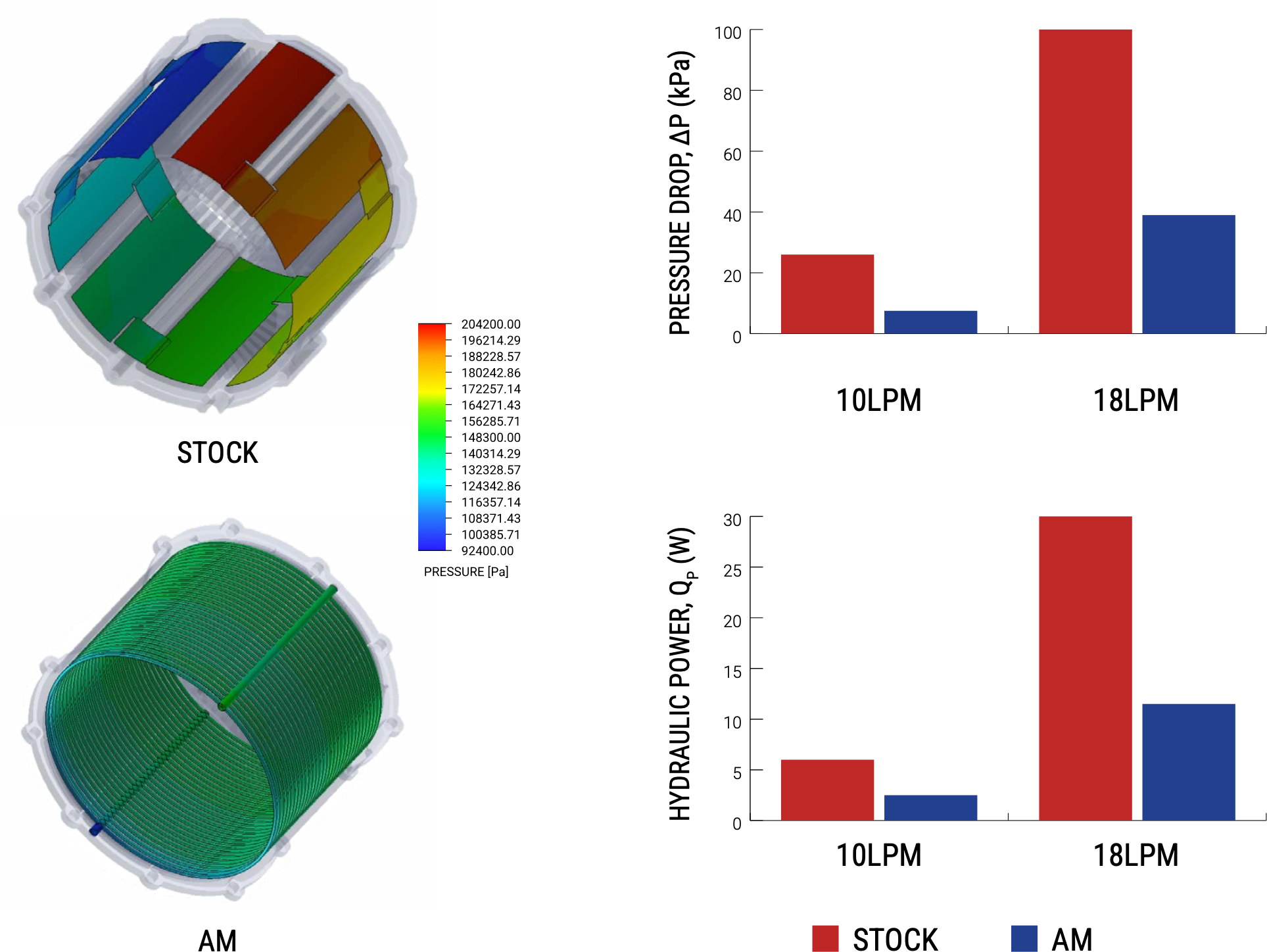
- More than 60% reduction in coolant pressure drop and hydraulic power consumption with larger savings as the flow rate increases
- Uniform cooling with 39°C reduction in overall temperature variation
- Drop of 18°C in maximum temperature with longer winding lifespan
Winner of the 2025 Additive Manufacturing Users Group (AMUG) Technical Competition for Advanced Concepts, the e-motor housing showcases the potential for aluminum AM to address real-world challenges in the drive for better efficiency and performance.

AMUG 2025 Technical Competition Winner
“More than 100% improvement in both energy use and heat control!
The result is an Additive Manufacturing replacement for an existing component, forgoing the need for motor redesign. This could not have been done any other way.”
-AMUG judging panel
The Challenge
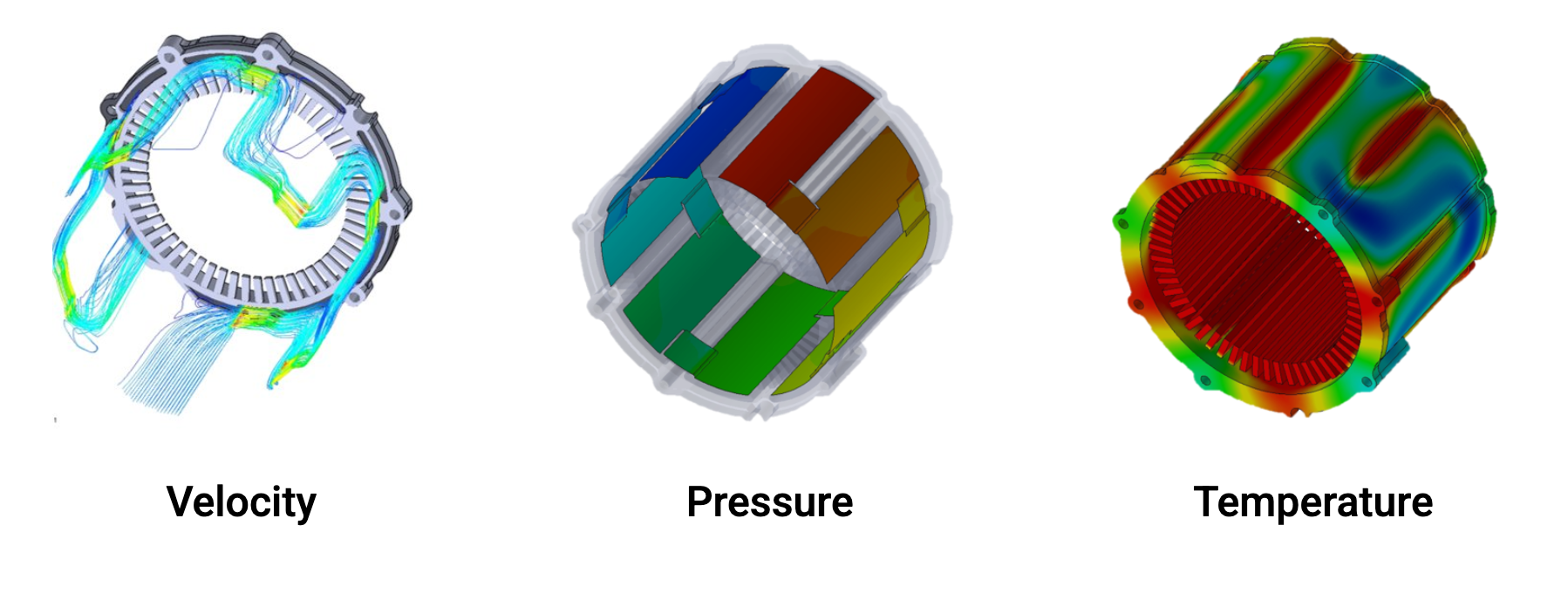
E-motors generate significant heat during operation, making effective thermal control essential for optimal efficiency, power output and lifespan. Poor thermal performance can also affect nearby systems such as the inverter and battery, which often share a common cooling loop. Inadequate heat dissipation has increased reliance on energy-consuming active cooling systems, reducing vehicle range and performance. Conventional thermal management often relies on larger pumps or increased coolant flow, but using passive cooling is more efficient and can improve the driving range of the e-motor system.
Previous research has explored integrating off-the-shelf heat pipes, typically by affixing the pipes in various ways for good heat transfer, with the condenser end routed away from the motor to extract the heat. General AM solutions for heat pipes have created complex, repeating cell wick structures for passive cooling – tedious to print – or used other materials besides aluminum.
Design Considerations
- The motor must be cooled effectively to maintain performance and efficiency while resisting component degradation
- The manufacturing method influences the design of the motor heat exchanger (typically the liquid cooling loop)
- The manufacturing process introduces thermal variation and hydraulic performance limitations that need to be considered in the design, including:
- Excessive pressure drop
- Inefficient hydraulic power consumption
(energy load to run the cooling pump) - Non-uniform temperature and high peak temperatures
The Solution
The project team applied advanced AM techniques to integrate two-phase passive cooling into the main structure of the 3D-printed part. The solution was designed to fit within the existing packaging envelope of a production e-motor, requiring no changes to the surrounding system architecture.
Two-phase vapor chamber:
Evaporated fluid spreads heat evenly over the full coolant heat exchange area Incorporate thin, porous metal layers as wicks to passively circulate fluid
Nested parallel flow channels (liquid cooling):
Parallel flow arrangements limit pressure drop and hydraulic power consumption Embedded array of small-diameter channels for a higher wetted heat transfer area
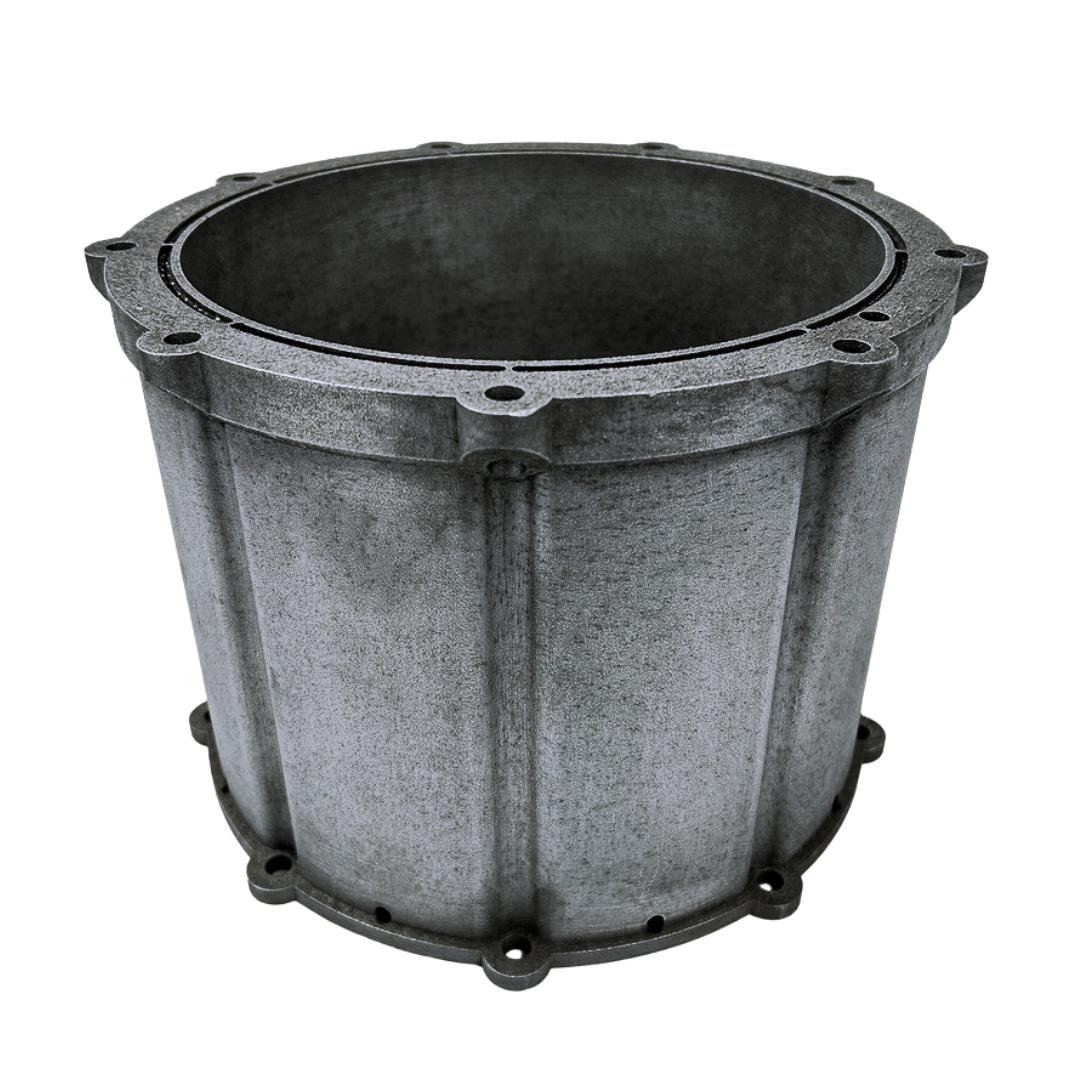
| SIZE | 280.7 mm x 194.6 mm |
|---|---|
| VOLUME | 2,156 cm³ |
| MASS | 5.8 kg |
| MATERIAL | Equispheres AlSi10Mg Performance Powder |
| PRINT PARAMETERS | Proprietary parameters developed for Aconity3D systems to print the fully dense body and porous wick of the vapor chamber |
How It Works: Two-Phase Passive + Liquid Cooling
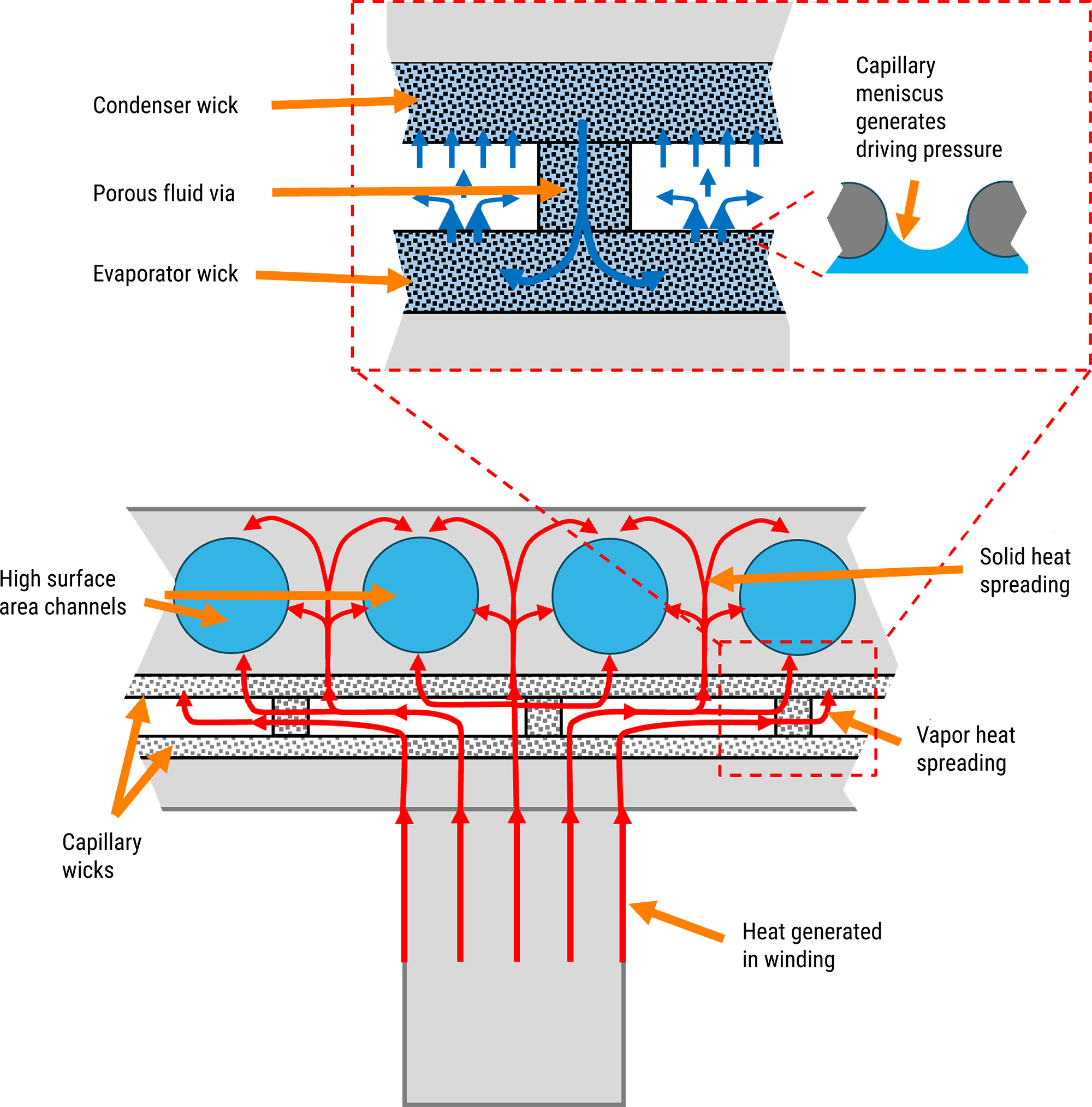
The e-motor’s hybrid cooling system combines passive vapor chamber heat spreading with liquid cooling, using a porous wick and embedded channels to manage heat within a compact aluminum structure.
- Heat generated by windings conducts through the inner aluminum case
- Heat conducts across thin, porous metal wick and evaporates
- Vapor spreads heat over a large surface area of the outer aluminum case
- Capillary wicks passively circulate vapor chamber fluid
- Embedded channels create a large, wetted area for heat transfer, enabling excellent heat spreading that fully utilizes the wetted area
The Advanced Materials
Parameters for printing the e-motor housing were set up for the AconityTWO system, leveraging Equispheres AlSi10Mg Performance Powder for consistent response during the printing process.
Uniformity and Flowability
Equispheres aluminum powders are highly spherical, with particles that flow more freely than the irregular shaped particles of standard powders with unwanted microscopic fines
(ø: 0.1–10µm) that can prevent uniform layer deposition.
| MEASUREMENT | SPECIFICATION | EQUISPHERES SPECIFICATIONS |
|---|---|---|
| Flow Rate, Hall | ASTM B213-20 | ≥45 s / 50g |
| Flow Rate, Carney | ASTM B964-16 | ≥11 s / 50g |
Melt Pool Control
When standard commercial powders are melted by the laser, variations in the powder lead to melting behavior that ultimately creates an inconsistent microstructure in the part. Equispheres powder melts and solidifies uniformly and predictably, enabling precise control over melt pool dynamics.
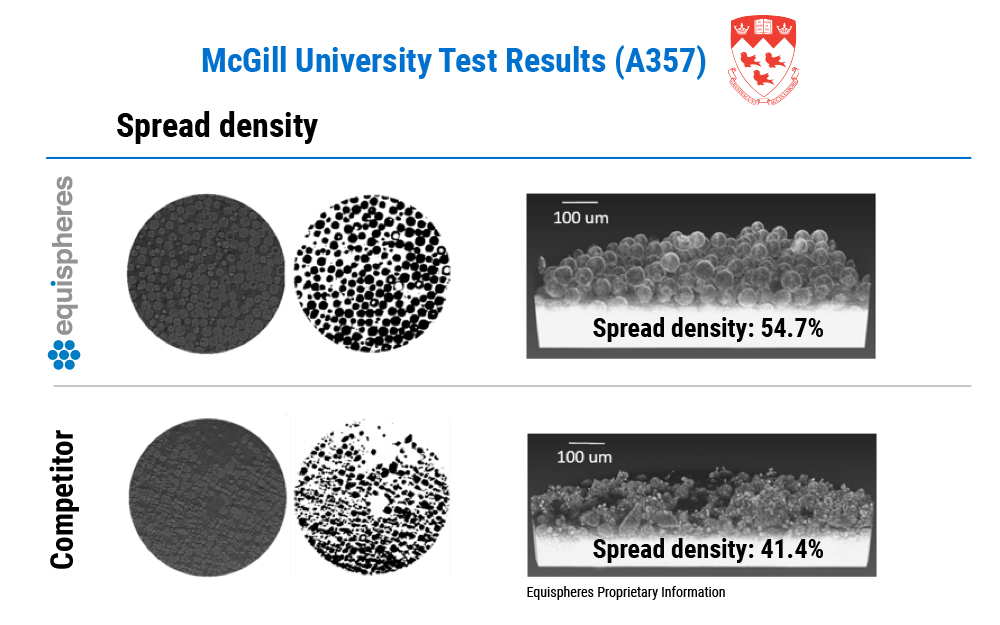
Consistent Spread Density
The uniform melting behavior and denser powder bed of Equispheres powder absorbs laser energy more consistently for reliable performance and repeatability.
The AM Process Optimizations
The demonstrator part incorporated vapor chambers – a type of passive heat spreader – in the redesign of an e-motor housing previously engineered for liquid cooling only. The functionality derives from a porous wicking region lining the chamber. Instead of using intricate laser paths or lattice structures, Equispheres developed a novel LPBF methodology to selectively build up the wick concurrently with the fully dense body of the housing in each slice of the print. This approach resulted in a wick structure capable of “pumping” liquid (one phase of the two-phase evaporation-condensation cycle) back to the hot zone where it will evaporate again.
The parameters and build process were developed for the AconityTWO system to create the high-permeability wicking surface directly during printing. The uniformity and consistent melt pool dynamics of the Equispheres AlSi10Mg Performance Powder enabled dynamic laser control of spot size, power, speed and scanning patterns. These process and powder optimizations resulted in a printed wick with functionality comparable to commercial heat pipe wicking surfaces, while maintaining a build rate for cost-effective volume production.
LPBF Parameters: High-Performance Wick
- Small, interconnecting pores and high permeability
- Fast printing (avoiding lattice structures and feature-intensive geometry)
- Consistent bed density and melting behavior, leveraging Equispheres AlSi10Mg Performance Powder
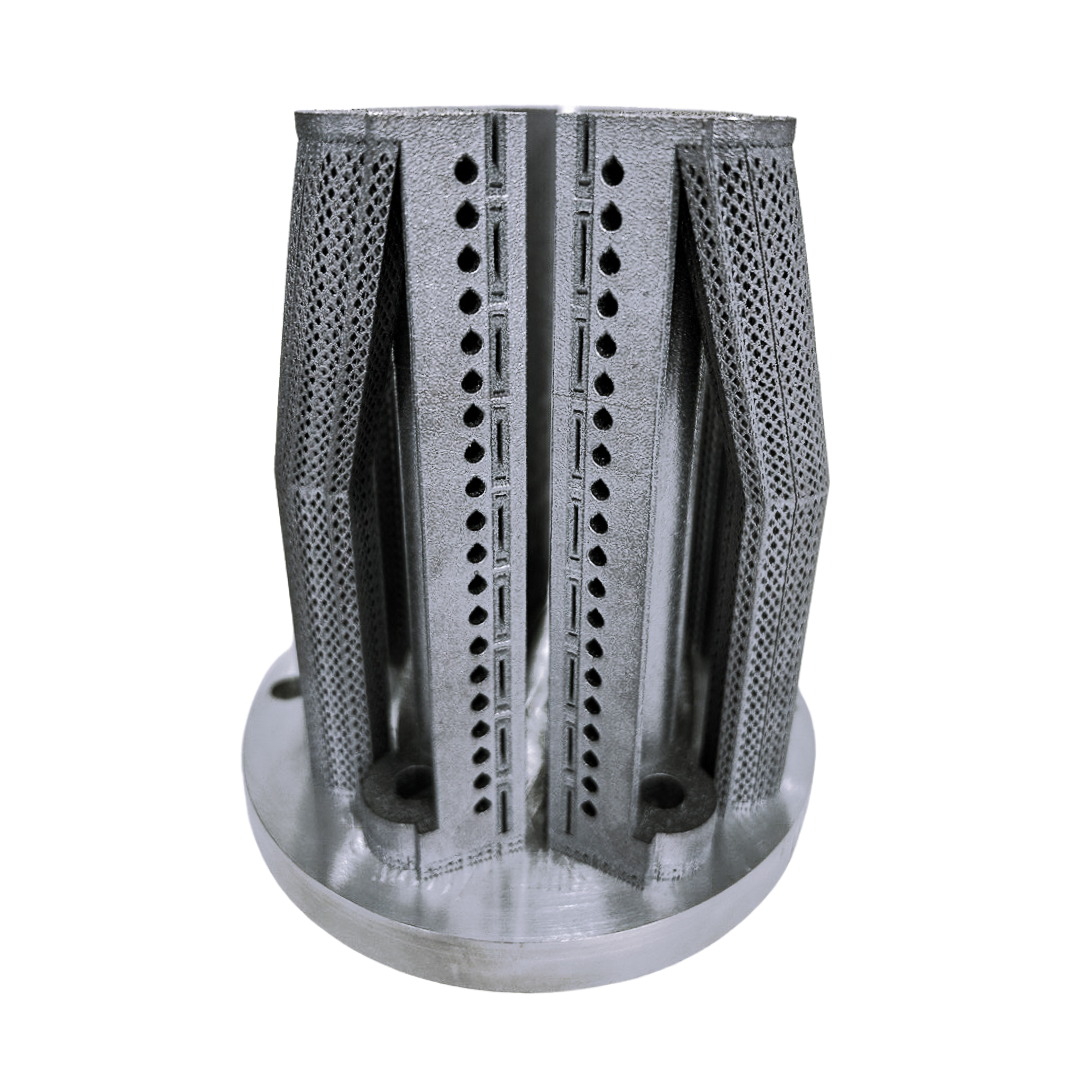
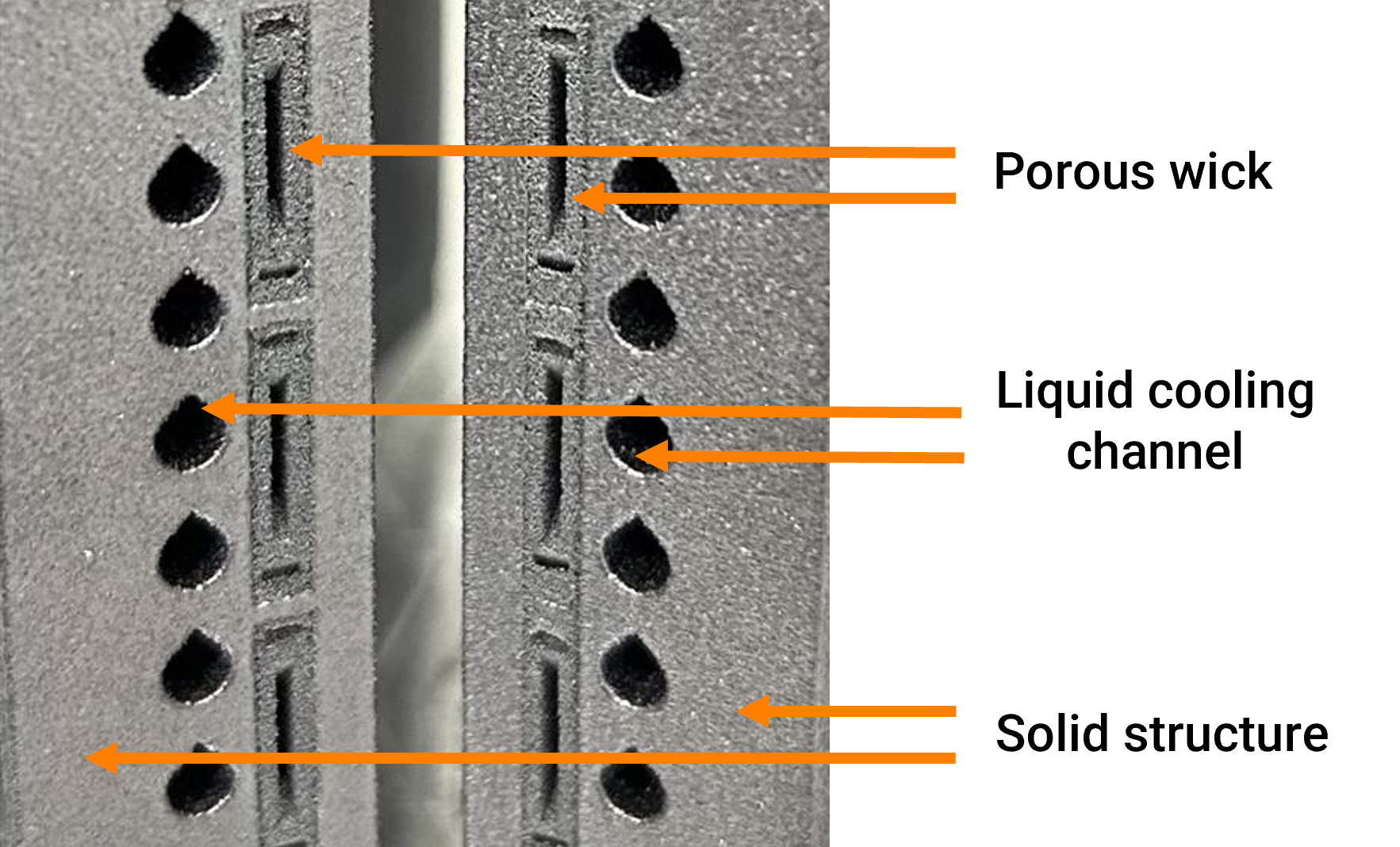
FIGURE 5: The wick structure (left) is shown in cross-section (right), highlighting the optimizations to print the high-permeability surface of the vapor chamber into the body of the e-motor housing.
The Results
The demonstrator part showed a vastly reduced pressure drop to move the same amount of liquid coolant through the e-motor housing. Thermal performance resulted in more uniform cooling due to the vapor chamber heat-spreading effect and more efficiency heat transfer.
Hydraulic Performance Enhancements
Optimizing internal flow paths and integrating the passive cooling chamber directly into the 3D-printed geometry delivered significant improvements in hydraulic performance compared to the conventional e-motor housing.
- More than 60% reduction in coolant pressure drop and hydraulic power consumption
- The magnitude of savings escalates with increased flow rate
Thermal Power Enhancements
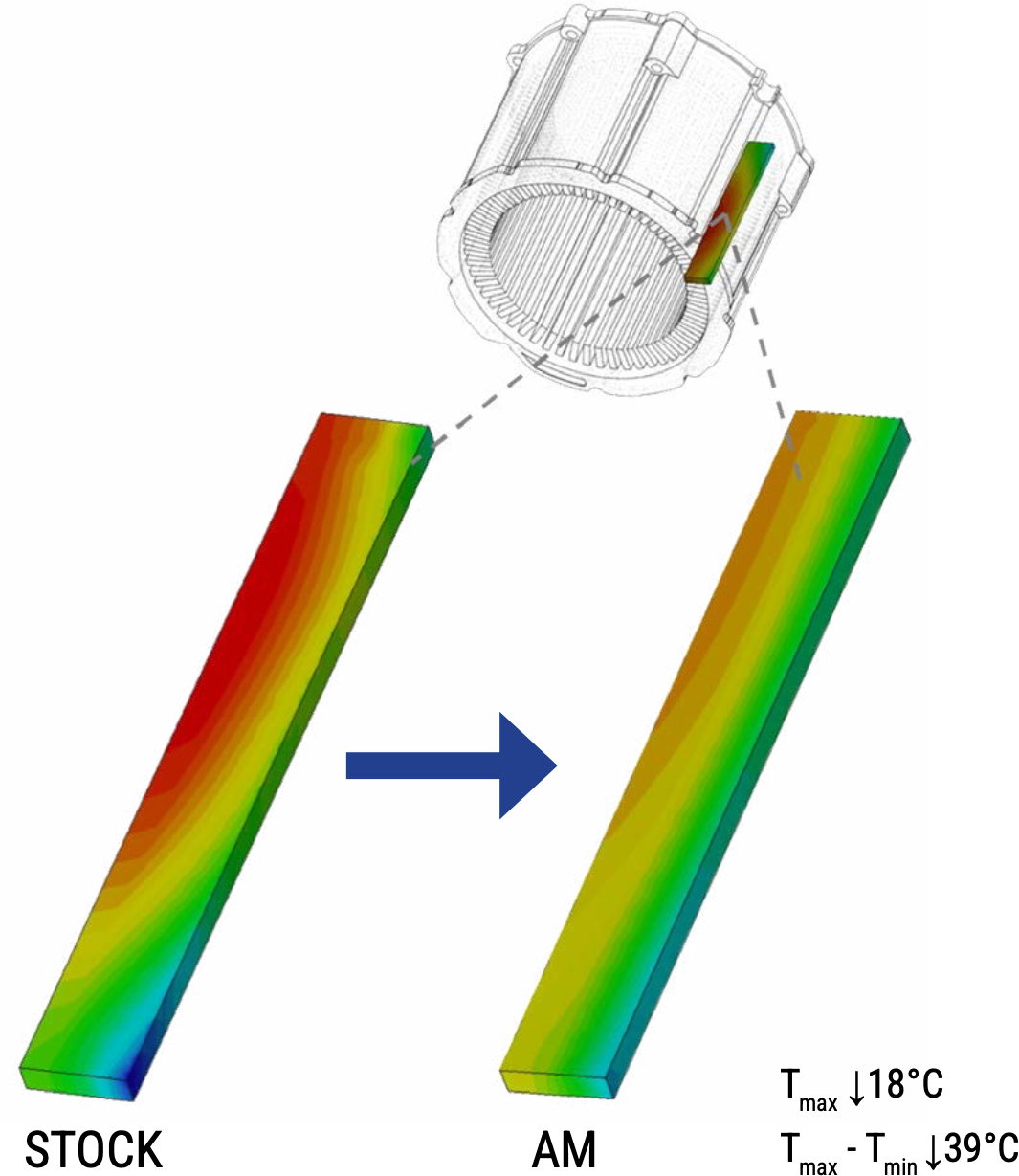
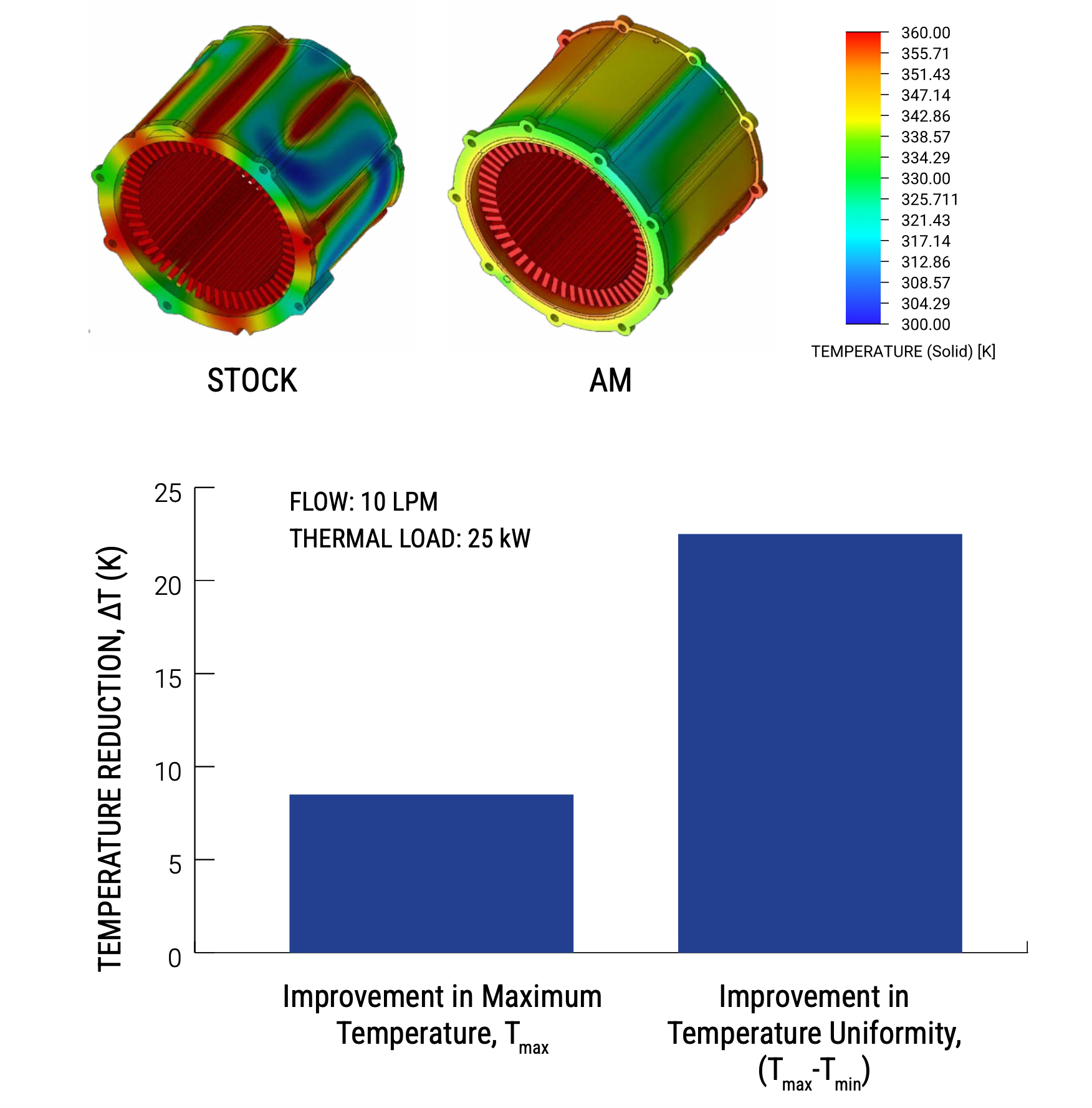
Thermal simulations were used to evaluate the effectiveness of the integrated two-phase liquid and passive cooling solution. With a coolant flow rate of 10 LPM and a steady-state heat load of 25 kW, the system demonstrated significant improvements in thermal regulation across the winding assemblies.
Testing demonstrated a substantial reduction in peak temperatures—nearly 20°C lower than baseline—and a marked improvement in temperature uniformity. This enhanced thermal consistency highlights the solution’s ability to distribute heat more efficiently and mitigate localized hotspots that can drive material fatigue and performance degradation.
- Overall reduction in maximum winding temperature, indicating improved heat transfer
- Improved temperature uniformity across and between all simulated windings
- Reduction of 18°C in maximum winding temperature
- 39°C reduction in the max-to-min differential
- Simulation Inputs:
- Flow: 10 LPM
- Heat Load: 25 kW
Anticipated Thermal Outcomes
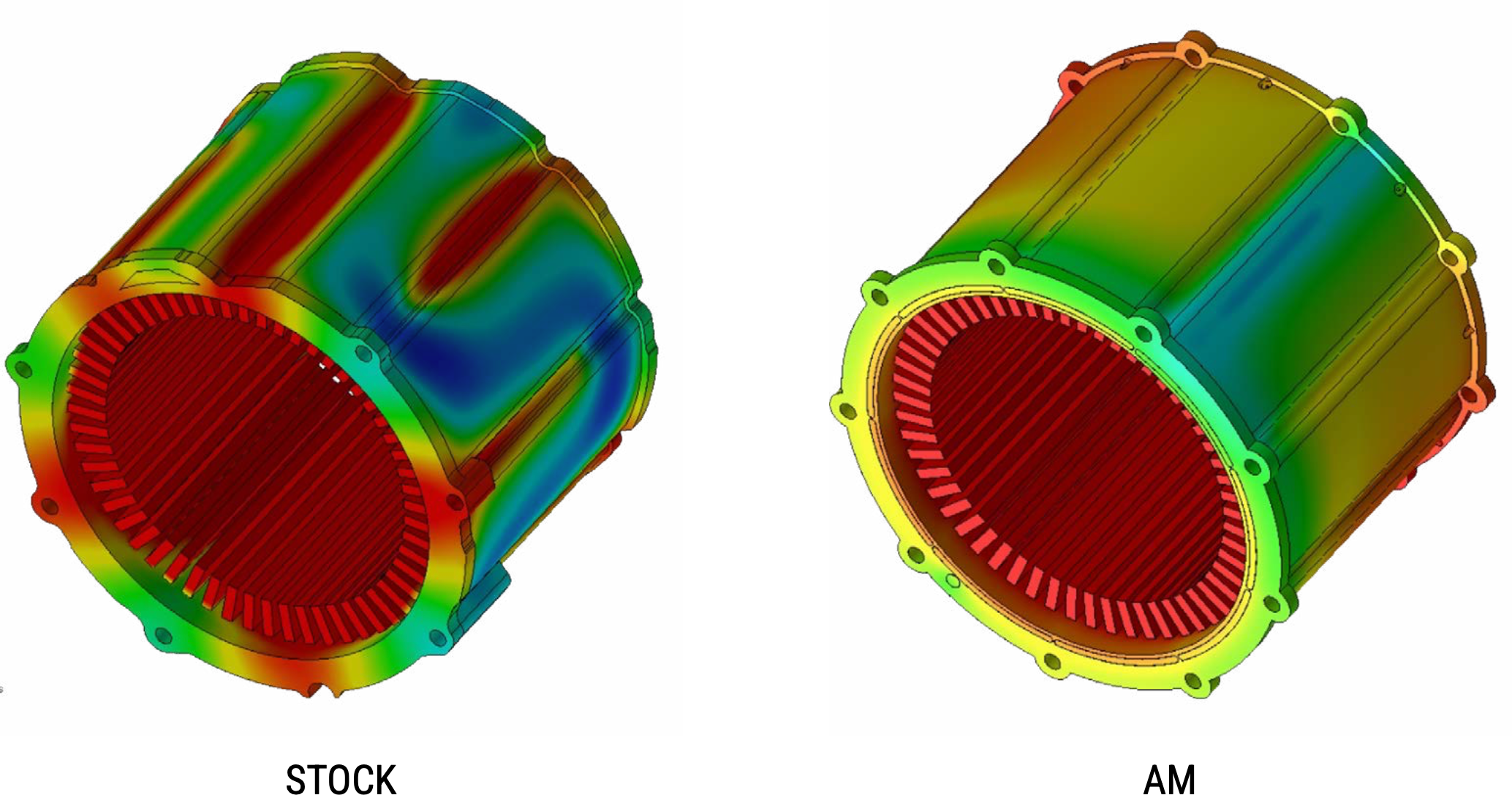
Initial testing suggests the potential for further thermal performance improvements under real-world operating conditions. The integrated cooling architecture is expected to deliver enhanced temperature homogeneity, significantly reducing localized hot and cold spots within the system. Projected outcomes include cooler, more uniform winding temperatures and more effective thermal exchange across the coolant interface. An increase in effective coolant contact surface area indicates improved heat spreading within the liquid-cooled structure for even higher thermal efficiency.
- Temperature homogeneity: Notable reduction in unwanted temperature gradients (hot/cold patches)
- Winding temperature: Operating colder with much improved temperature uniformity
- Coolant surface area: Clear evidence of improved heat spreading throughout the liquid-coolant heat exchanger
The Industry Applications
The integration of two-phase liquid cooling and passive heat dissipation into a single 3D-printed aluminum part represents a significant advancement in thermal management. By leveraging the benefits of vapor-phase heat transport in a smaller, more efficient form factor, this novel solution minimizes power usage for cooling while improving the thermal profile for system longevity and performance. While the demonstration application delivers significant advantages for Electric Vehicles (EVs), it can be applied in use cases across industries where thermal efficiency, weight reduction, and reliability are mission critical.
Automotive & Electric Vehicles (EVs)
In EVs, thermal performance directly affects battery range, powertrain efficiency, and system safety. Vapor chambers embedded in a lightweight aluminum housing distribute heat evenly, reducing hot spots that could degrade components over time. Other automotive applications include battery enclosures, power inverters, and on-board chargers.
Aerospace & Defense
Lightweight, efficient components are design requirements for aerospace and defense applications. The integration of passive cooling ensures low-power operation in remote or high-altitude environments. Potential use cases include thermal management in avionics chassis, radiator panels, satellite heat spreaders, and payload housing.
Electronics & Semiconductors
High-density applications, from GPUs to power transistors, present thermal management challenges. Integrated vapor chamber cooling within 3D-printed aluminum heat sinks, casings, or PCB backplates can deliver passive heat transfer to protect chips from thermal stress and extend device lifespan in compact enclosures with limited airflow.
Renewable Energy Systems
High ambient temperatures in solar farms or wind installations pose a risk to inverters, battery packs, and controllers. Hybrid-cooled aluminum enclosures—capable of functioning with little or no active cooling—can enable consistent thermal regulation in remote or off-grid settings.
Industrial & Power Systems
Uninterrupted cooling is essential for motors, converters, and compressor systems. A 3D-printed vapor-chamber with passive cooling can be used to maintain thermal uniformity, boosting equipment longevity and reducing thermal cycling damage.
Summary
In response to growing thermal management demands in high-density systems, Martinrea and Equispheres collaborated to redesign and rebuild a standard e-motor housing using aluminum AM. The objective: create a drop-in solution that combines passive two-phase cooling with active liquid cooling—enhancing thermal efficiency in a single 3D-printed part.
Using advanced LPBF techniques with Equispheres AlSi10Mg Performance Powder, the project team printed a fully functional vapor chamber directly into the aluminum structure. Eliminating external heat pipes, the e-motor housing streamlined the thermal path to generate significant improvements in heat transfer and hydraulic performance. Parameters developed for the AconityTWO commercial printer demonstrate the capability to support build rates and workflows for volume production.
AM Innovations
- Integrated passive and active cooling: A thin, porous wick layer enabled fluid cycling for passive vapor-phase heat spreading and transfer to an array of small-diameter embedded liquid channels
- Optimized LPBF parameters: Developed for the AconityTWO system to print high-permeability porous regions and fully dense structures in a single build
- Laser control techniques: Combined incomplete melt techniques with full-density printing to create the passively cooled vapor chamber (extensible to other heat pipes)
- Material performance: Equispheres aluminum powder delivered precise melt pool control and uniform microstructure, critical for forming the functional wick with consistent pore geometry
- High-quality part: Conformal cooling channels, structured wicking, and DFAM best practices were incorporated in the design to produce a high-quality aluminum part with similar functionality to commercial wicking surfaces
Performance Outcomes
- More than 60% reduction in pressure drop and pumping power
- 18°C lower peak winding temperatures
- 39°C reduction in temperature variation
As more heat-producing components are housed in smaller form factors, integrated cooling solutions will be essential. This project demonstrates the application of aluminum AM to thermal management by embedding multifunctional features directly into structural components. This innovative approach can be applied to EV systems and other high-density applications, with production-scale capability using commercially available AM technologies.
About Martinrea International Inc.
Martinrea International Inc. (TSX: MRE) is a leader in the development and production of quality metal parts, assemblies and modules, fluid management systems, and complex aluminum products focused primarily on the automotive sector. Martinrea currently employs approximately 18,000 talented and motivated people and operates in 56 locations in Canada, the United States, Mexico, Brazil, Germany, Slovakia, Spain, China, South Africa and Japan. Martinrea’s vision is making lives better by being the best supplier we can be in the products we make and the services we provide.
For more information on Martinrea, please visit www.martinrea.com.
About Equispheres
Equispheres develops breakthrough technologies for the production and deployment of aluminum powders in Additive Manufacturing (AM). Leveraging our patent-pending technology and process expertise, we strive to eliminate the performance and economic obstacles limiting the full potential of metal AM at industrial scale. By providing our customers in the automotive, aerospace, defense and semiconductor sectors with a secure North American supply chain for mass production, we empower innovation and collaboration.
For more information, visit equispheres.com.